
This is part of a larger project I am working on. These are just raw reactions to the text as I read it. For the final discussion, check out my Substack.
In Plutarch’s biographies of Philopoemen and Titus Flaminius, we see powerful examples of war not just being about winning battles but also securing peace. Unlike many of Plutarch’s other pairs of lives, Philopoemen and Flaminius were contemporaries and even involved in the same conflict. The Macedonian Wars were a series of fights between 214-148 BC. Originally an offshoot of the Punic Wars because of Macedon’s alliance with the Carthaginians, the Macedonian Wars grew into a general conflict over control of Greece, the eastern Mediterranean, and the Bosporus.
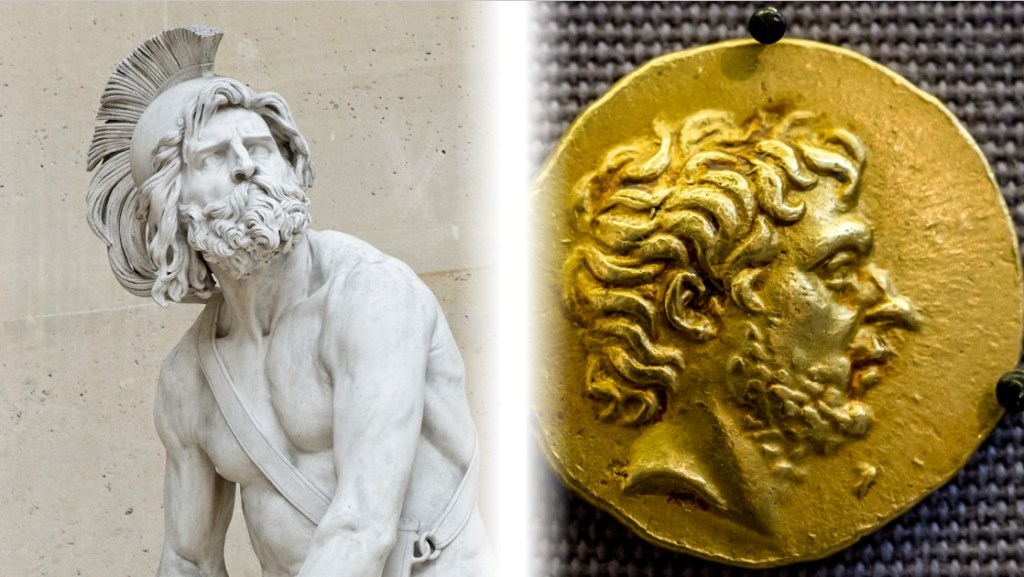
Philopoemen was born in Megalopolis, part of the Achaean League, a Peloponnesian confederacy often the subject of Spartan, which was in turn was a client state of Macedon during Philopoemen’s youth.
During his life, he helped reform the Achaean army, first bringing its cavalry to a high state of training, and later converting their infantry from primarily a light infantry force focused on skirmishing, into one that wore heavy armor and could go toe to toe with a Macedonian Phalanx.
During the many campaigns in the period where Greek fought against Macedonian, Greek fought against Greek, and Rome fought against everyone, Philopoemen led an insurrection against first Macedonian subjugation of Greece, and then Spartan subjugation against Achaea. The Roman’s attempted to make common cause with Philopoemen but he did not believe, correctly, that they really intended to let Greece stay independent long term. He did not want to exchange one master for another and instead wanted true independence for Greece. However, he had a heavy-handed style of liberating Greece and failed to turn temporary enemies into long term friends. He did not articulate a vision for a united Greece, fighting instead more for a goal of separate independence for all city-states, a dangerous proposition in a world surrounded by much bigger empires.
Flaminius began his public service during the Second Punic War, serving as an aide to Marcellus and gaining valuable experience. He was a Hellenophile and gladly took on a campaign against Macedon, which he framed as having the goal of securing Greek liberation.
After defeating the Macedonian King Phillip in battle, Flaminius declared Greece free and set about reducing the various small tyrants hold outs left, such as the Spartans. He offered at times to coordinate activities with and ally with Philopoemen, but the Achaean would have none of it. He later fended of attempts by Pergamum and the Seleucid empire to intervene in Greece following the collapse of Macedonian power. These two Anatolian powers were worried about the idea of Rome getting a foothold on the western side of the Bosporus. To win over the Greeks, Flaminius governed with a light touch. He restored many of their traditional laws and sought only the timely payment of taxes to Rome. This stood in stark contrast to Philopoemen who, when he captured Sparta, knocked down their walls and upended a system of government that had existed nearly since the time of Lycurgus in the semi-mythical past. Flaminius and the Romans, it seemed to many Greeks, had more respect for Greek culture than the Greek Philopoemen. As a result, Flaminius and the Romans were largely greeted as liberators and Rome had relatively little trouble bringing Greece into the empire, first as a protectorate and later as a province.
If you’re interested in the final discussion of the book, check out my Substack.
 The History Doctor
Leave a comment