
This is part of a larger project I am working on. These are just raw reactions to the text as I read it. For the final discussion, check out my Substack.
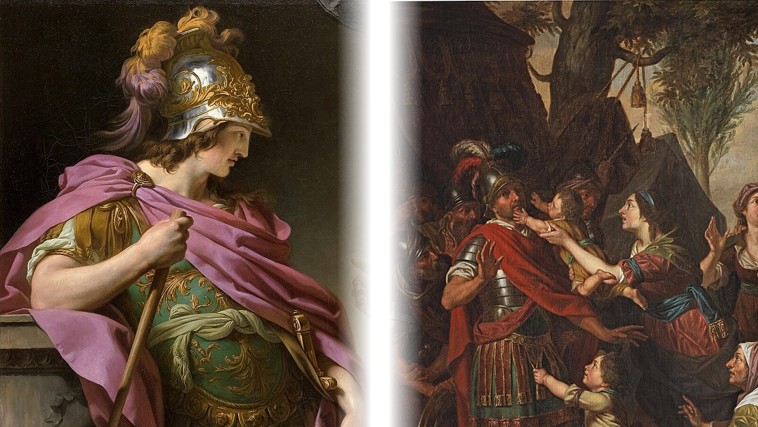
Alcibiades was a prominent young Athenian at the time of the Peloponnesian War’s first phase. His family had strong familial connections with Sparta and had been a primary conduit for mediating disputes between the two cities. However, Nicias had taken the lead on securing a peace treaty with Sparta after the Athenian successes at Pylos and Cythera, which culminated in the “Peace of Nicias.” Annoyed by this, he undermined the peace and encouraged further action against Sparta, first by fermenting a proxy war between Sparta and Argos and later promoting the idea of Athenian conquest of Sicily as a jumping off point for subsequent attacks of Tuscany, Carthage, and Libya.
Enraptured with the power and wealth a larger empire would bring, the Athenians voted for the Sicilian expedition and elected Alcibiades as one of its leaders. However, before he could depart, he was implicated in an act of heretical public vandalism. He did leave with the fleet but was soon recalled as the charges grew more serious after his departure.
Worried, Alcibiades fled to Sparta, asking for political asylum and offering to help them in their war against Athens. He led Spartan-allied forces in support of anti-Athenian regimes in the eastern Aegean but soon fell out of favor with the Spartans as well, subsequently defecting yet again, this time to the Persians.
The Persians were nominally Spartan allies at this point in the war, but Plutarch argues that Alcibiades counseled the Persians to back the Spartans only enough to where they would tire out both the Athenians and the Spartans. About this time, an oligarchy of The Four Hundred overthrew the democracy in Athens, and Alcibiades came to the democrats aid.
With democracy reestablished, he worked with Athenian forces to roll up Spartan-allied positions along the Hellespont, preserving Athenian access to its colonies and subject states in the Black Sea. However, his military success meant that he really was not welcome in Athens itself, least he get ideas of establishing a tyranny of his own.
The Athenians ordered him once again to the eastern Aegean and, while gone, a Spartan army under Lysander sacked Athens and installed the tyranny of The Thirty. Alcibiades fled to Persia fearing Spartan persecution. He was right to do so, because the Spartans had assassins track him down and kill him so that the Athenians would not hold out hope of his return and their liberation from the Spartan-backed government.
Coriolanus may or may not have ever actually existed. According to Roman tradition, he lived around the time of the end of the tyrant Tarquin’s reign. He was an accomplished warrior and of noble patrician birth.
He was involved repeatedly in the internal power struggle between the Senate and the common people, so much so that he was run out of Rome. He then offered his services to the Volscians, a neighboring, then powerful, enemy of the republic.
He led the Volscians in repeated attacks on Rome that threatened to bring down the city. Helpless and without other ideas, the people of Rome appealed to Coriolanus’ family. His mother, wife, and children visited him in the Volscian camp, and his mother shamed him into leading the Volscian army away saying that hers would be the first dead body they would have to cross over in Rome’s conquest. Angered by his betrayal, the Volscians killed Coriolanus.
Whether Coriolanus existed or not, the story of both he and Alcibiades are important because they speak to the tension that exists between governments and the army. Armies are powerful groups of armed people with the ability to overthrow the government, be it democratically elected or not. Unless a government wants to be constantly under threat from the forces established to defend it, they need to establish an expectation of deference to legitimate governmental authority by the military and its leaders. This is especially true in democratic forms of government like Rome and Athens where the military is a minority of the population but has a disproportionate ability not to except majority rule. In focusing on Alcibiades and Coriolanus, Plutarch was trying to promote an idea of civil-military relations that has ceased to function in the Roman empire of his day.
If you’re interested in the final discussion of the book, check out my Substack.
 The History Doctor
Leave a comment