
This is part of a larger project I am working on. These are just raw reactions to the text as I read it. For the final discussion, check out my Substack.
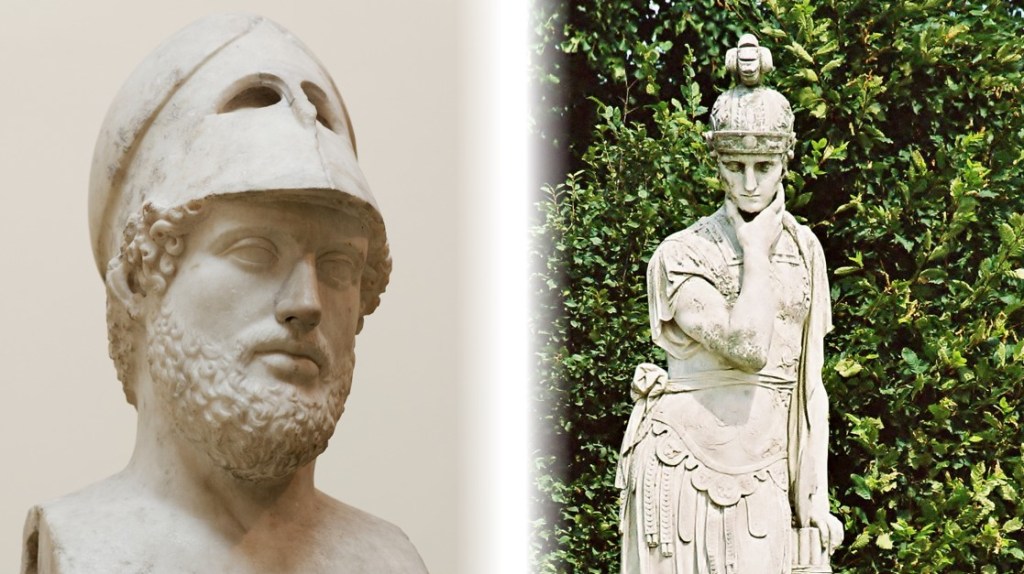
Pericles was an Athenian politician born after the Grecco-Persian War. He sided more frequently than not with the democratic forces in the city and feuded often with Cimon, an Athenian demagogue that used his large personal wealth to try and buy the love of the people.
Worried that Pericles might become too popular with the masses, the more affluent members of the city tried to sponsor Thucydides as a counterweight to Pericles. However, Pericles remained more popular with the people of Athens. To Thucydides’ surprise (and dare we say admiration), once he was secure as archon, Pericles made tough decisions that were not always popular with the people of Athens. He was willing to risk their opprobrium if he thought their policy decisions were shortsighted and argue with them about why they should go in a different direction.
Some examples of this democratic leadership were an emphasis by Pericles on the consolidation of the empire rather than popular-backed efforts to expand it to places as far away as Sicily, Tuscany, Egypt, and Palestine. He also authored the Thirty-Year truce with Sparta, despite calls for war, arguing that Athens needed to be prepared for a war like that and not rush into it prematurely. When war finally came, Pericles authored a defensive deliberate strategy that took advantage of Athenian naval supremacy and did not engage in needless imperial expansion.
The later Roman Fabius showed a similar focus on deliberative strategic thinking. The Carthaginian Hannibal had invaded Italy; the citizens of Rome were terrified about what to do. Fabius argued that Hannibal only had a small force available to him. He had marched overland around the western Mediterranean with only the supplies his men could carry. He was short on money and had to live off whatever forage his army could find outside of city walls. The best plan, according to Fabius, was to not attack Hannibal directly, but rather to tire his army out while supporting Rome’s allies more open to Carthaginian attack. His fellow consul Flaminius disagreed and rushed a Roman army to its death at the Battle of Lake Trasimene.
Fabius was then in charge of the army from time to time, but it was a long conflict and at various points the Roman people, tired of Fabius’ deliberative strategy, allowed a different commander to try a more aggressive approach. Those interruptions resulted in Roman defeats or near defeats at Geronium and Cannae.
After Roman successes against Carthaginian forces in Spain, many Romans called for an attack on Carthage itself. Fabius, now elderly, threw water on this idea but the expedition, under Scipio, was a success and resulted in not only Hannibal, also older, leaving Italy, but also Hannibal’s defeat in north Africa.
Pericles and Fabius are interesting commanders because they clearly show leaders thinking about conflict in strategic terms that took measure and advantage of material, geographic, and temporal resources, not just figuring out how quickly they could get at the enemy to kill them. It is not surprising that both have maintained a revered place in the annals of military history.
If you’re interested in the final discussion of the book, check out my Substack.
 The History Doctor
Leave a comment